College Writing Workshop: Professor Young
1 October 2017
The Necklace: To Lie or Not to Lie
Is there ever a right time to lie to someone? In the grand scheme of things, you should always try to avoid lying. There is only one time in life that lying is completely acceptable. Protecting yourself when in danger is that one situation. If a gun is to your head, you're going to say what that person wants to hear, whether you agree or not. Within our reading "The Necklace" by Guy De Maupassant, the main character Mathilde is met with a choice of lying or confessing what had happened, and one must learn what the overall right thing to do is, and that lying can have bad consequences if used in the wrong spot.
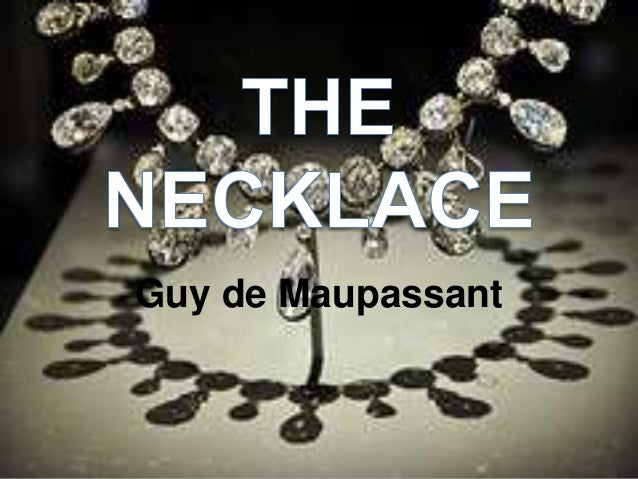
Within our reading, Mathilde is full of greed and ungratefulness. She always wished she had more. Who knew that this wish would be her ultimate downfall. When finally met with an opportunity to go out to a ball and have fun, she felt she had to have an extremely expensive dress or she would be made fun of. Even when she had the dress, she still desired more, So she borrowed what was thought to be a really expensive necklace. It was one of the best nights she ever had, as she felt like she was the prettiest, most expensive woman in the building. But, one of her best nights turned to one of her worst, when she ended up losing the necklace. Instead of telling Madame Forestier what had happened, she lied to her and replaced the necklace worth 36,000 francs. She then spent the next 10 years paying off the necklace with hard labor. This is when Mathilde is hit with the worst irony she could have received, as she found out that the necklace was fake, and worth virtually nothing.
 While it may seem like Mathilde's downfall was carelessly losing the necklace, it was actually the fact that she lied about losing it that was the ultimate downfall. There are multiple cases of irony within "The Necklace." The main one being that she worked hard to pay off a necklace that was worthless. Another would be her beauty. One of Mathilde's best assets was her beauty. Because of the fact that she lied, she basically worked her beauty away. When Mathilde confronts Madame Forestier at the end of the story, it says "The other, astonished to be familiarly addressed by this plain goodwife, did not recognize her at all..." This statement just shows how much of a downward spiral her looks took because of the labor. She took the necklace in the first place to look more beautiful, and in the end it just took that look away from her.
In the end, we find out from the reading that lying can have serious consequences if used poorly. It is always better to tell the truth. This is evident in the play when Mathilde lies about the necklace. Had she told the truth, none of the bad things that happened afterwards, would have happened. She would have lived her life normally. Instead, because she tried to cover up her mistake, she spent the next ten years working nonstop, and ended up losing her beautiful looks as well. Lying should never be the go to in order to get out of a situation, as it could hurt you more than help.

Here's a cute little cartoon video giving an easy to understand summary of "The Necklace": https://www.youtube.com/watch?v=qxnicBE-A4E